

Creative Deviation
What Chris Gaines Teaches Us About Creativity

Hello my friend!
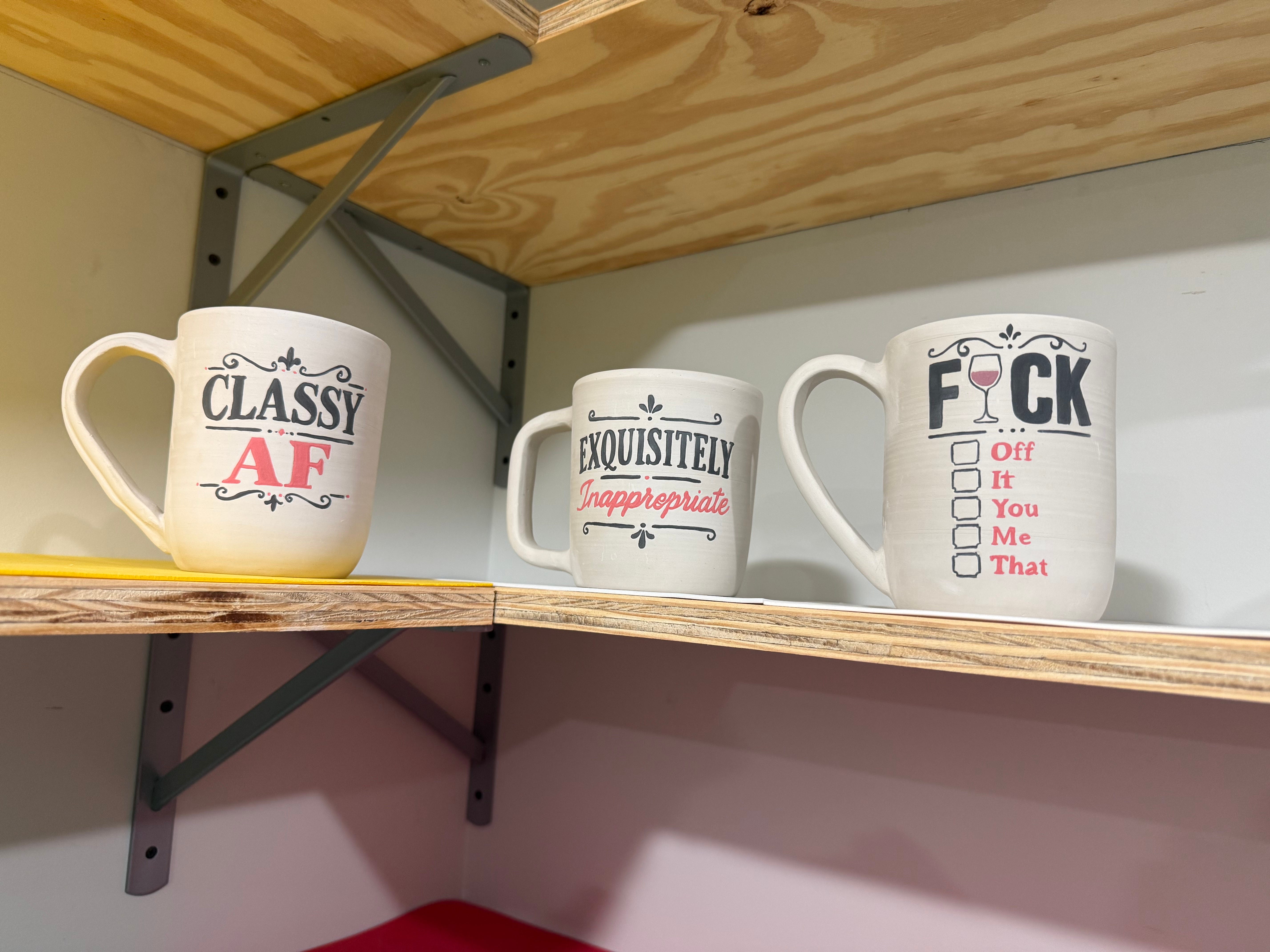
I hope you had a good weekend. Mine was filled with yard work and pottery. We just reached an agreement with a local bar/restaurant Boardables 615 to sell our pottery. But they want the edgy stuff. My favorite! So we are in production mode. Here are a few I just painted that will go in the shop. They are awaiting bisque firing.
Today we go back to 1999 and an experiment in creativity the failed miserably. Do you remember Chris Gaines?
No?
Well, then let me tell you a little story…
In 1992, I had a renaissance.
Not professionally. Personally.
I went through a divorce, remarried, and somewhere in the middle of all that, I found my way back to something I’d left behind years earlier.
Country music.
I grew up with it. My dad kept radio station KLAC playing from the moment he got up until he went to bed. In the car and the garage. Merle. George. Conway. Loretta. It was simply the soundtrack of our house.
By the time I reached high school, though, country wasn’t cool. I still listened to it, but only in private.
Then my future ex-wife came into my life with some deeply held religious convictions. Way stronger than mine.
No rock. Satanic Panic and all in the 1980s.
No country. “Married, but not to each other…” even poor Barbara Mandrell was cancelled.
Instead, we listened to Keith Green, Farrel and Farrel, Benny Hester, and a seemingly endless stream of Christian music. It sounded enough like pop music to keep your foot tapping, but every song reminded you that someone was either saved, getting saved, or should probably think about getting saved. And no matter how hard you try, you just can’t get a good workout to that kind of music.
It wasn’t my thing. I thought it was a cheap imitation. Like that ultra low cost breakfast cereal you buy in large bags at Walmart.
But I listened anyway.
Eventually we listened to normal music again, but by then I had no interest in country.
But when that marriage ended, going back to country music felt like coming home. Coincidentally, country was experiencing a renaissance of its own. Traditional sounds were making a comeback. Alan Jackson. George Strait. Toby Keith. Brooks & Dunn. And a goofy-looking guy in an oversized cowboy hat named Garth Brooks.
The man could sing.
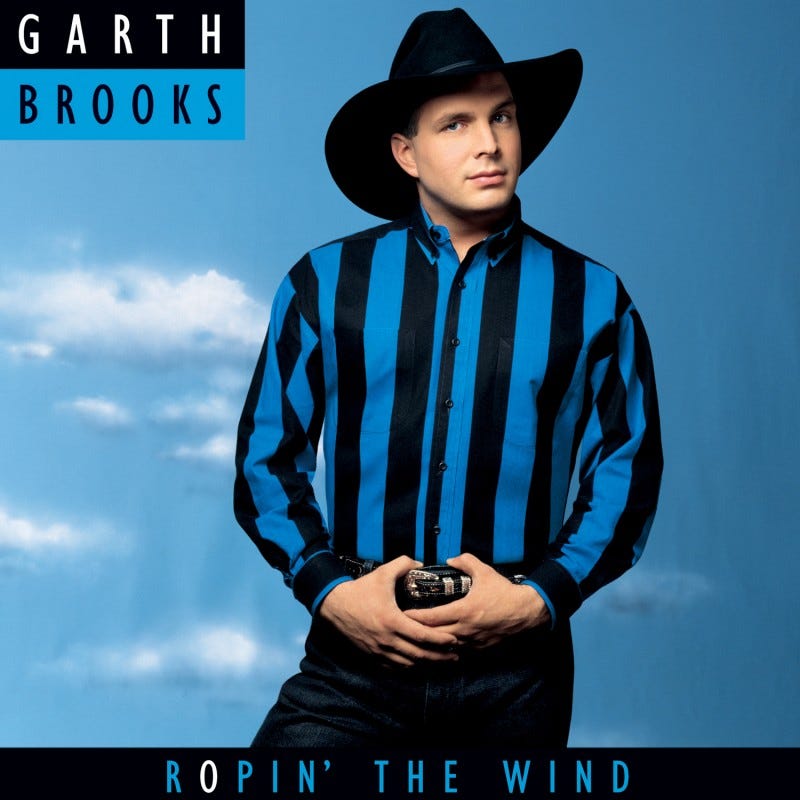
When Barbara and I drove from Tennessee back to California after we got married, we practically wore out the Ropin’ the Wind cassette we had.
Then the Navy transferred us to Guam.
That’s where we discovered CMT.
Country Music Television was MTV for people whose pickup trucks cost more than their houses.
The videos were hit or miss, but the music was fantastic. Especially Garth.
At first.
Then Garth started changing.
The songs drifted away from the traditional sound that had made him famous. The videos became stranger. One featured him sitting at a piano while buckets of paint were dumped over his head. Then I read an interview where he talked about recording a KISS tribute album.
I remember thinking, What happened to the guy in the big black hat?
Little by little, I stopped listening to Garth.
Then, in 1999, Chris Gaines appeared.
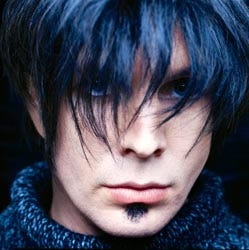
Imagine waking up one morning to discover John Wayne had become Alice Cooper.
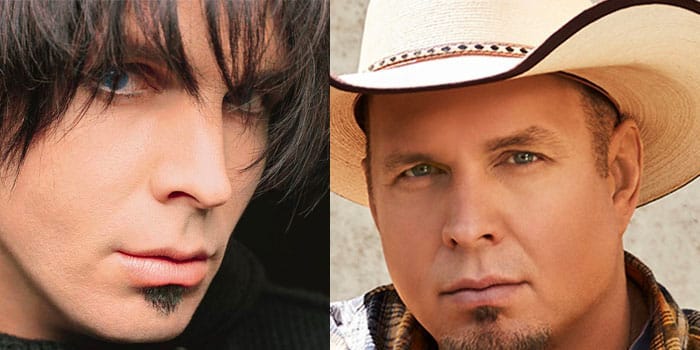
It was Garth, but the cowboy hat was gone.
In its place was jet-black hair hanging over one eye, a tiny soul patch beneath his lip, and enough eyeliner to rival Cher. He looked liked he was channeling Liza Minnelli on open stage night at the drag show.
Chris Gaines wasn’t just a stage name.
He had an entire life.
A history.
A career.
A mythology.
What most people never realized was that Garth Brooks wasn’t trying to reinvent himself. He was trying to tell a story.
By then, he’d already conquered country music. He had sold tens of millions of albums, packed stadiums across America, and had little left to prove. Rather than release Garth Brooks Album Number Twelve, he imagined something wildly different.
He created a fictional Australian rock star named Chris Gaines.
The first album wasn’t meant to be Gaines’s debut.
It was supposed to be his greatest hits, as though audiences had somehow missed twenty years of an extraordinary career. The album would introduce the character. Then a feature film called The Lamb would reveal the man behind the music. Future albums would fill in different chapters of his fictional life.
It was an astonishingly ambitious idea.
There was just one problem.
The movie never happened.
Without The Lamb, there was no context. No roadmap. No explanation.
The public wasn’t introduced to a fascinating fictional character.
They were simply handed Garth Brooks wearing eyeliner and told, “Enjoy!”
People thought he’d lost his mind. I know I did.
Ironically, the Chris Gaines album still sold millions of copies. For almost any artist, it would’ve been a career-defining success. For Garth Brooks, whose albums routinely sold ten million or more, it was considered a disappointment.
Eventually Chris Gaines quietly disappeared.
Garth divorced, stepped away from the spotlight for several years, married Trisha Yearwood, and eventually returned to the stage singing the songs that had made everyone fall in love with him in the first place.
I think about Garth Brooks/Chris Gaines a lot these days.
Not because I’m about to start wearing eyeliner.
Because I understand the creative itch.
People loved what Garth Brooks sang. He just reached a point where he wanted to sing about something else.
Many of you have told me how much you enjoy my weekly INNER CIRCLE. About 300 of you subscribe, and roughly thirty percent of you open each week, which is an incredible compliment in today’s world. More importantly, many of you write back. You tell me a story reminded you of your dad, your childhood, your military service, or a moment you thought only you remembered.
Those messages mean more to me than you’ll ever know.
I love writing INNER CIRCLE because, at my core, I’m a storyteller.
But there’s another side of me that’s been waiting patiently in the wings.
You’ve seen glimpses of it. The story of Pop Haney was probably the biggest clue. It looked like history, but it was really fiction wrapped around truth. It let me teach, entertain, and imagine all at the same time.
Writing Pop Haney was the spark.
It became the inspiration for Tales from the Whitmore, which launches in about a month. It’s a fictional world filled with ordinary people whose extraordinary stories might just change the way we see our own lives. I’ll be sharing more about it here over the coming weeks.
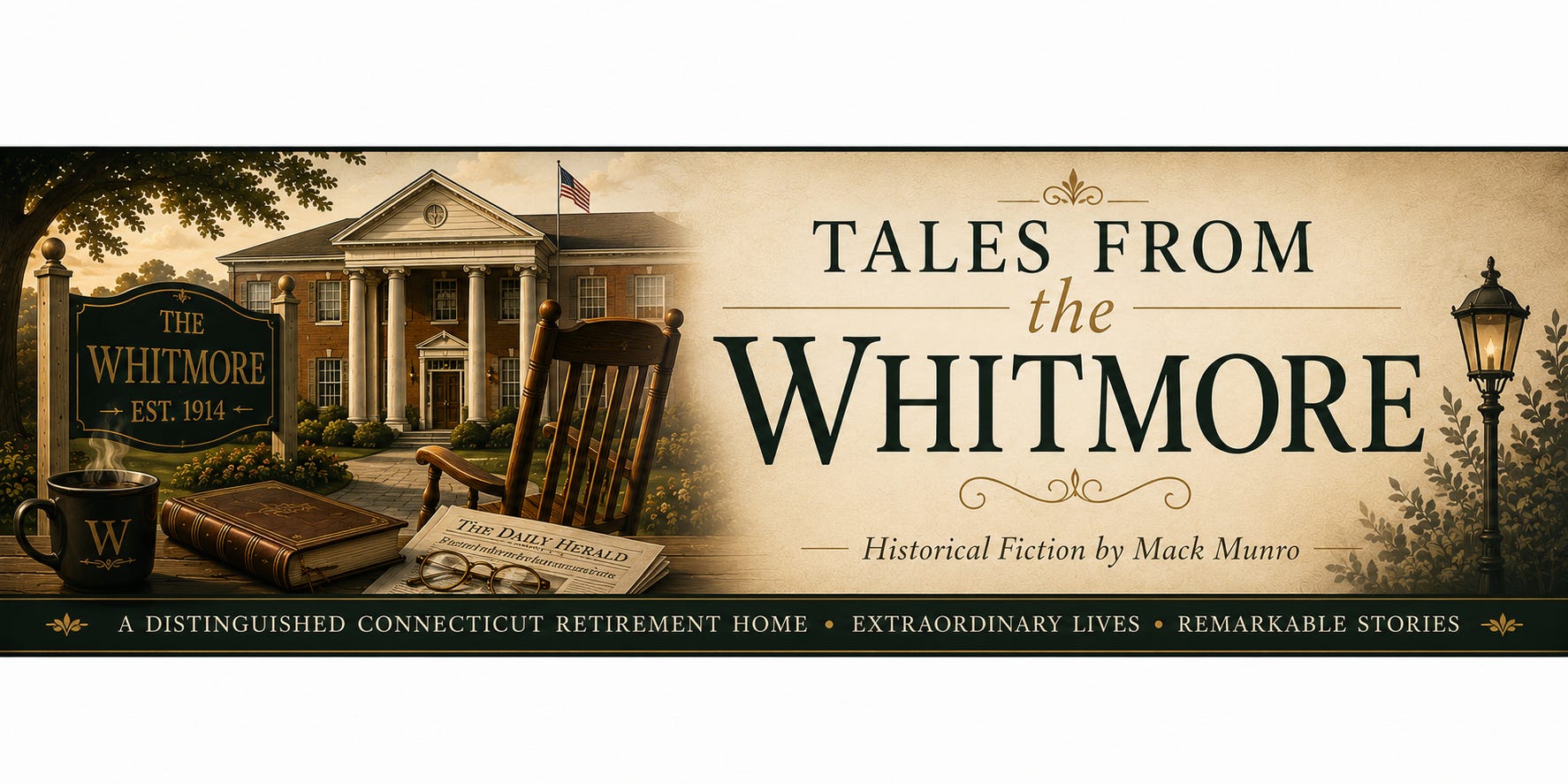
If you’d like to come along for the ride, you can subscribe for free at talesfromthewhitmore.substack.com.
But, as the late-night infomercials always promise...
That’s not all!
I’ve been an avid reader my entire life. Stephen King has probably influenced me more than any other writer, and for years I’ve wanted to write horror. Not splatter and gore. The kind of stories that linger in your head long after you’ve turned off the light. Think Black Mirror or The Twilight Zone.
I’ve already outlined several.
Those stories won’t come from Mack Munro.
They’ll come from someone named Silas Kane.
Silas is my Chris Gaines. Not because I’m hiding who I am, but because some stories deserve a different voice. Mad Mack shouldn’t be the distraction. Silas will be your guide.
Beginning this fall, probably around Halloween, Tales from the Shadows will begin appearing from time to time. If Whitmore explores hope and healing, Shadows will wander into the darker corners of human nature.
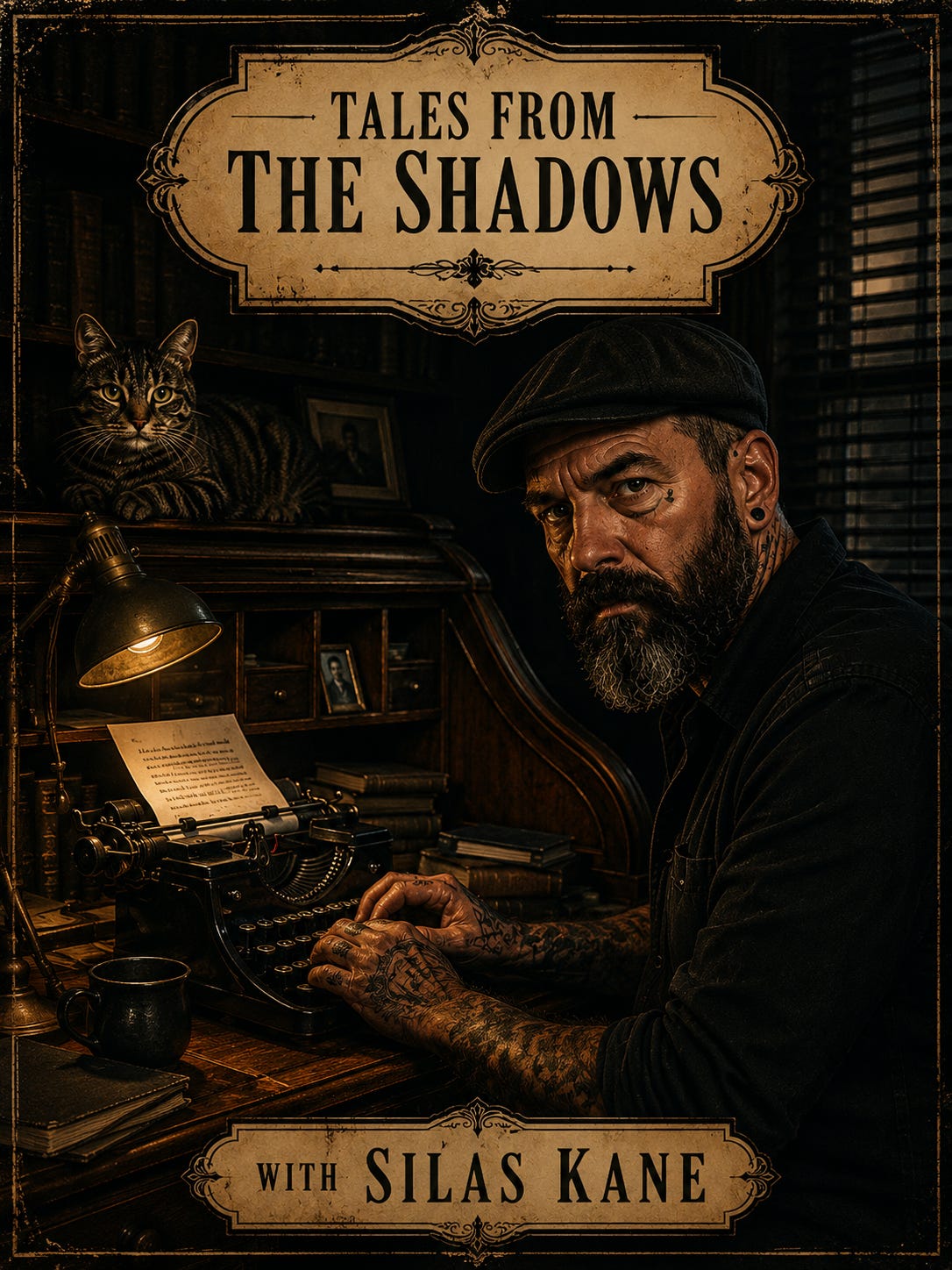
If that sounds like your kind of campfire, you can subscribe at silaskane.substack.com.
At 62, I’m less interested in staying inside the lines than I am in seeing how many pictures I can paint before I run out of canvas. Or clay and printer paper in my case.
I want to become the best writer and artist I’m capable of becoming, wherever that journey leads. With whatever time I have left.
If you’ve been with me this far, you’ve already got a front-row seat.
I hope you’ll stick around for the next act.