
A Sign from Above
Another reason to keep your BD in fine working order!

Hello my friend!
I hope you’ve had a good week. The snow and ice is finally gone and I can see pavement again. Too bad we still have a few more weeks of winter. I don’t want to go through that hell again.
This week, we go back a few years to an incident some of you probably remember. If you don’t, my post will fill you in. If you do, then this will be a fun look back. If you haven’t read my story about the Bullshit Detector, read it first HERE.
Now, let me tell you a little story…
On one of the most watched stages in the world, standing just three feet from presidents, kings, and global power… a man moved his hands with complete confidence.
And almost nobody realized he was saying nothing.
It’s December 10, 2013, and I’m sitting in front of the TV flipping channels. Daytime soaps, a few game shows, nothing memorable. Just background noise for an ordinary day. Then I land on CNN and see the live broadcast of Nelson Mandela’s funeral.
World leaders. Dignitaries. History unfolding in real time.
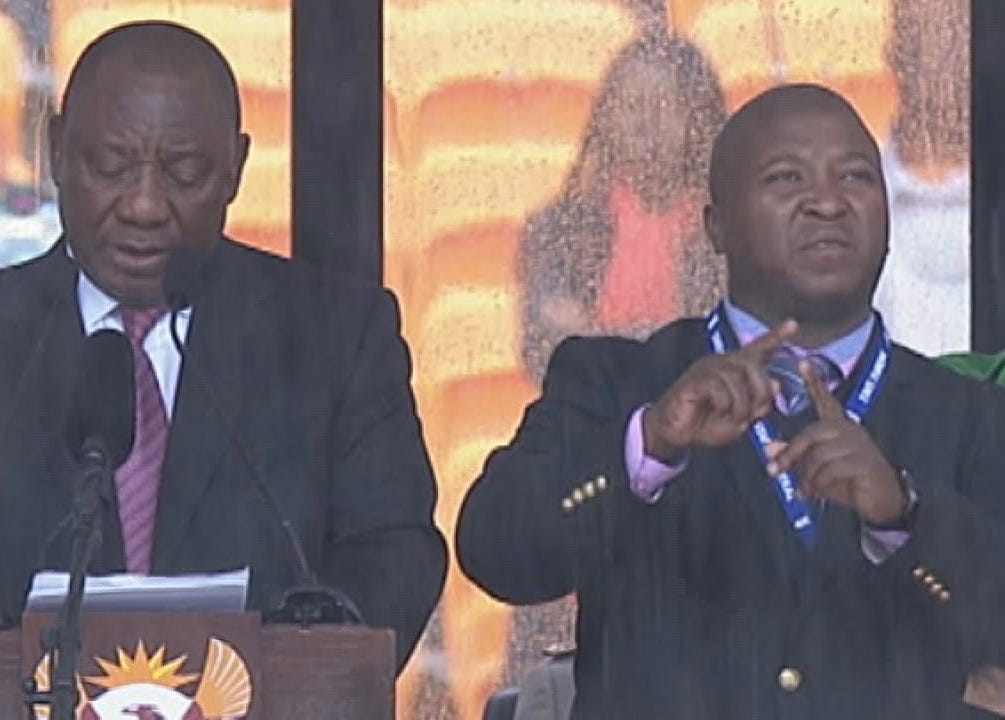
After several speeches, U.S. President Barack Obama steps to the podium to deliver his remarks. Standing just off to the side, in a world all his own, is a man named Thamsanqa Jantjie. He’s been hired to provide sign-language interpretation.
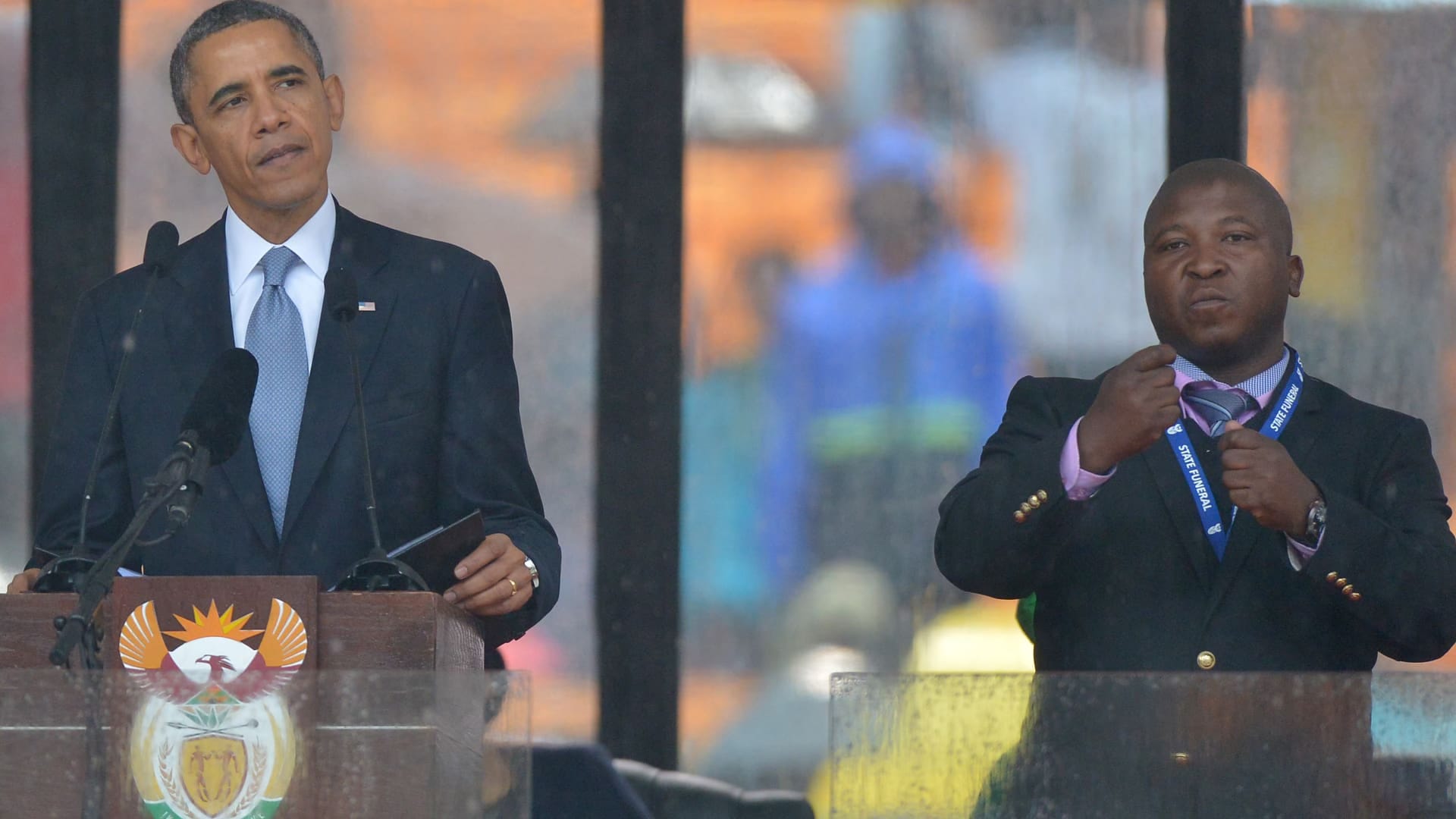
That part is completely normal. Anytime someone important speaks publicly, you usually see a sign-language interpreter nearby. The Tennessee governor uses one during tornado warnings back home. Florida has them when hurricanes roll in. One day California will have them when the Big One finally shows up. It’s simply part of the modern visual landscape of public communication.
I never think much about it. I can’t read sign language anyway, and I hear just fine… although my wife would probably file an official objection to that statement. So, I watch for a while, change the channel, and don’t think about it again until the next morning.
That’s when the story breaks.
News reports begin surfacing about Jantjie, the man who had been standing just a few feet from some of the most powerful leaders on Earth. According to sign-language experts, he had no real idea how to interpret sign language at all. What looked complicated and official to untrained viewers like me was, in reality, visual nonsense—hand slapping, arm waving, movements with no linguistic structure or meaning. Not interpretation. Just motion.
From Johannesburg came a deeper explanation. Jantjie later said he suffered a schizophrenic episode during the memorial, claiming he hallucinated, heard voices, and even saw angels while standing on that global stage. He said he tried to hold himself together and keep the world from seeing what was happening inside his mind.
But professionals in the deaf community revealed something even more troubling: this wasn’t the first time concerns had been raised. Earlier appearances had already triggered complaints, with experts concluding that no legitimate sign language had been used—only gestures without grammar or meaning. Warnings had been issued. Concerns had been communicated. And still, during one of the most watched memorial services in modern history, he stood there again, three feet from presidents and kings.
He wasn’t certified. In fact, at the time, only a handful of interpreters in the entire country held formal certification.
He was paid about eighty-five dollars to be there.
And somehow, no one stopped the ceremony.
Because Jantjie looked like he knew what he was doing, nobody questioned him.
That’s fucking scary!
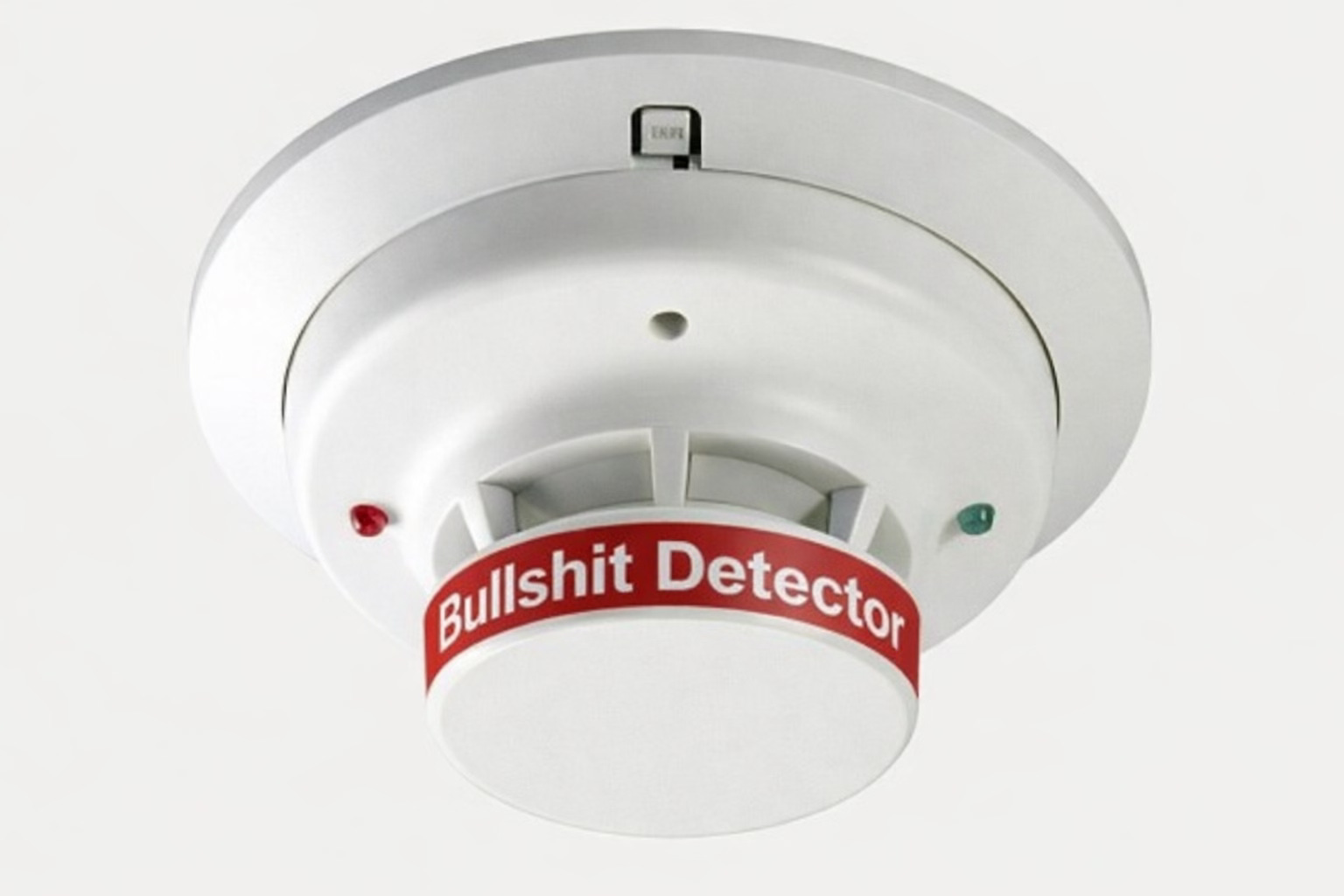
And a word of warning, particularly to those of you who do NOT have a well-oiled Bullshit Detector. If you fall for phony SLIs, what else might trap you? How can we avoid getting fleeced by nefarious actors on the public stage? I have three suggestions. I hope you’ll internalize them.
The world rewards confidence long before it checks competence.
Jantjie stood beside global power and looked completely legitimate. Security cleared him. Organizers trusted him. Cameras framed him. No one paused to ask the simplest question: Can this man actually do the job?
The reason is uncomfortable but familiar. He looked the part.
A badge, a stage, calm posture, and proximity to authority can easily convince the human brain that something is real. We trust the setting. We trust the uniform. We trust the moment. Yet history keeps repeating the same quiet warning: appearance is not evidence, confidence is not competence, and access is not truth.
Your bullshit detector is not optional equipment. It is survival gear.
Millions watched that broadcast. Experts in sign language knew immediately something was wrong. The rest of us nodded along as if everything made sense, and that gap matters.
Life is full of fluent nonsense delivered with absolute certainty—in boardrooms, news conferences, corporate town halls, and political speeches. Smooth words and strong posture often hide the absence of substance. The real danger isn’t that deception exists. The real danger is how easily we surrender our skepticism when someone stands close enough to power.
A working bullshit detector asks a few quiet questions:
Does this actually make sense? Who benefits if I believe it? What proof exists beyond confident words?
Turn that detector off and anyone can lead you anywhere. Turn it on and illusion begins to crack.
Never outsource your thinking. Especially to politicians.
Here’s the uncomfortable mirror in this story. A man waved meaningless signs beside the most powerful leaders on Earth, and the ceremony continued without interruption. No one on that stage stopped to say something isn’t right, because doing so would have been awkward, disruptive, and politically inconvenient.
That is the quiet danger of power: the closer words get to authority, the less often they get challenged.
This story isn’t only about one interpreter in South Africa. It’s about every podium, every press conference, and every perfectly polished sentence that asks you to believe first and verify never. Truth doesn’t fear questions. Only performance does.
So, the lesson isn’t cynical. It’s protective. Listen carefully. Question calmly. Verify quietly. And remember that standing next to power is never the same thing as speaking the truth.
Finally.
I keep coming back to the image of that man on a world stage, just a few feet from history, moving his hands with complete confidence while almost nobody realized the movements meant nothing. Not at first. Not in the moment. Not while the cameras were rolling and dignitaries were nodding.
The world is very good at mistaking ceremony for truth. We see a podium and assume honesty. We see authority and assume competence. We see confidence and assume meaning. But meaning isn’t created by proximity to power, and truth doesn’t appear simply because a microphone is turned on.
That day in Johannesburg wasn’t only about one troubled man having a public breakdown. It was a mirror held up to all of us—a reminder of how easily humans drift into passive belief, how quickly we trust the performance, and how rarely we pause to ask, quietly and courageously, Is this real?
Because the most dangerous lies are rarely shouted. They are delivered calmly, standing beside the truth, wearing a badge that says official.
Maybe the lesson isn’t about embarrassment or blame. Maybe it’s simpler than that. Stay awake. Stay curious. Keep your bullshit detector tuned just a little sharper than the crowd.
And remember:
Truth doesn’t mind being questioned, but bullshit depends on silence.
Have an AWEsome week!
I remember this incident. I found it to be insulting to the intelligence of those with impaired hearing. What a disrespectful goof ball!